
Between May 22 and 25, the Székely Gyors and the Csíksomlyó Express will once again set off on their journey. Organized jointly by Kárpáteurópa Travel Agency and the renewed MÁV Passenger Transport Co., the pilgrimage is not only a religious event but also a cultural mission.
Key details:
Route: From Western Hungary through Budapest all the way to Székely Land. The train travels via Southern Transylvania on the outbound journey, while the return route runs along the Mureș Valley through Debrecen back to Keleti Railway Station in Budapest.
Special guests: The honorary guest on board is Miklós Varga, and during the journey Kamilla Dévai-Nagy and her students will also perform for passengers.
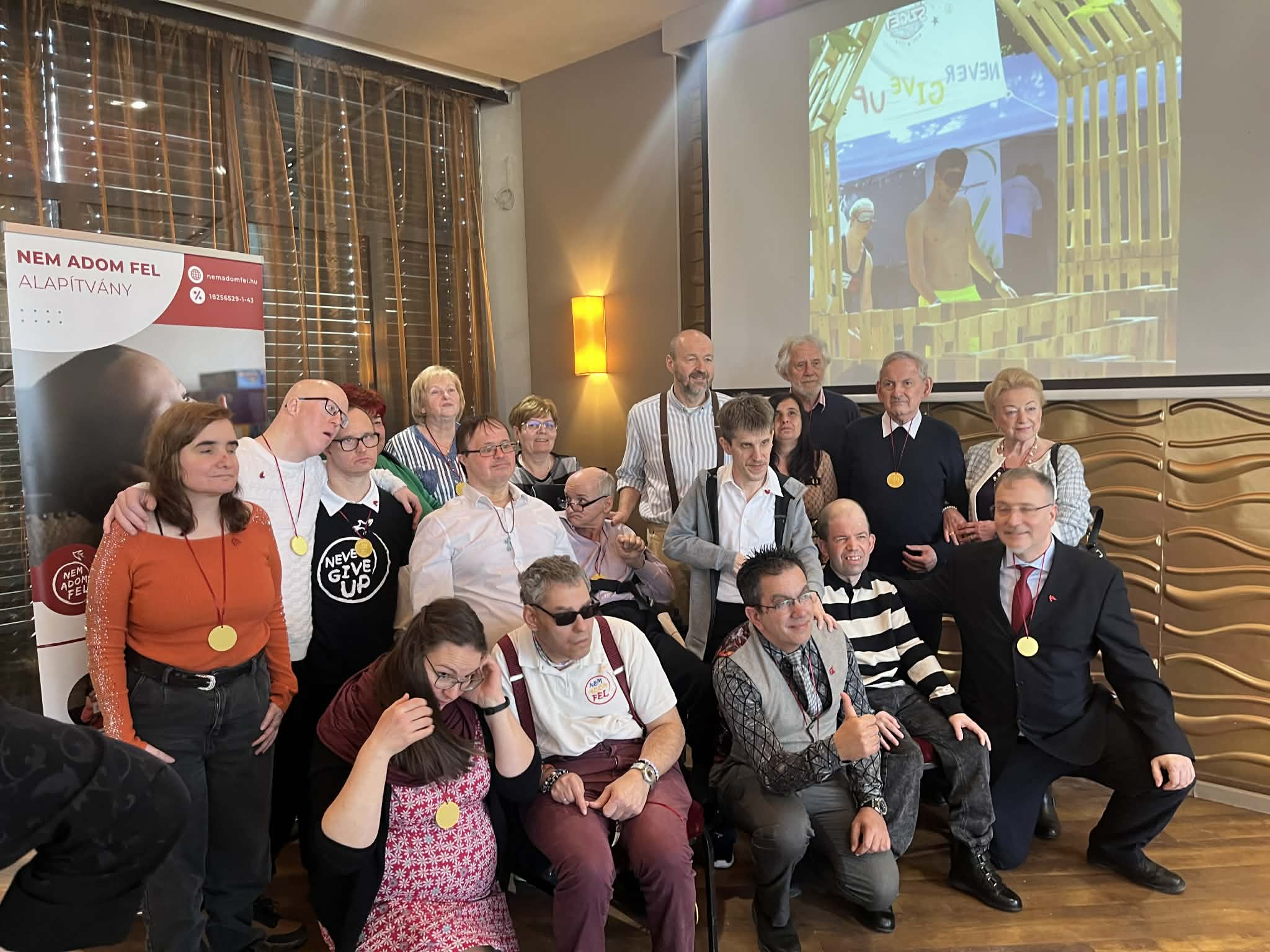
Charity: This year’s pilgrimage includes a fundraising initiative to support Csángó children living in the Gyimes region.
Modern railway experience: The train will be hauled by the Márton Áron commemorative locomotive. Following the merger of MÁV and Volánbusz, organizers promise an even more efficient, “door-to-door” travel service for groupors.
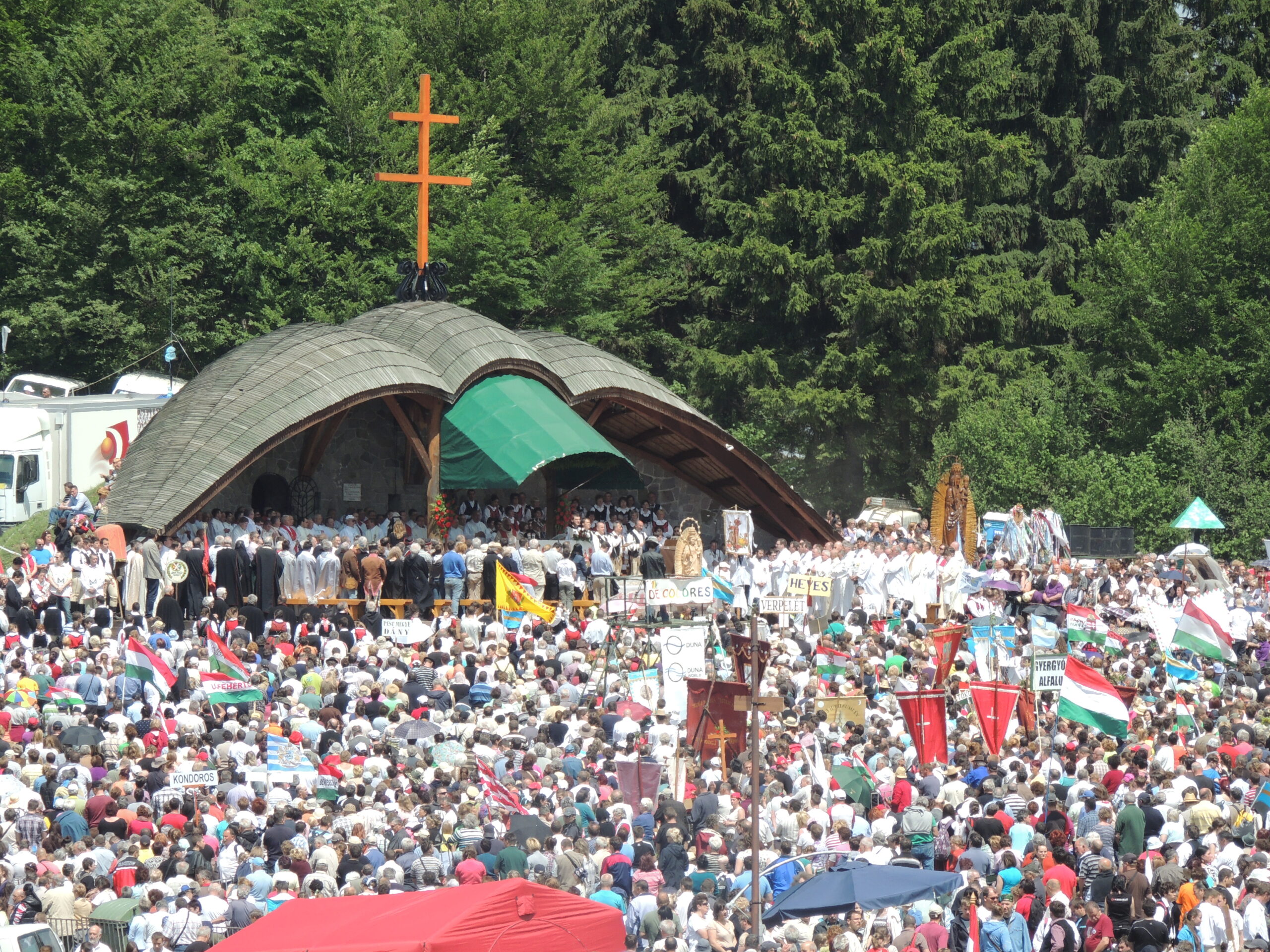
The Csíksomlyó pilgrimage is far more than a religious event; it is one of the most profound expressions of Hungarian identity and tradition. Every year at Pentecost, hundreds of thousands of pilgrims make their way to the saddle near Csíksomlyó, where faith, history, and community come together in a unique and powerful way.
The origins of the pilgrimage date back to the 16th century. According to tradition, in 1567, during the reign of John Sigismund Zápolya, Catholic Székelys resisted efforts to convert them to Protestantism. After their victory, they made a vow to gather every year at Pentecost in honor of the Virgin Mary. This vow became the foundation of a tradition that has endured for more than four and a half centuries.
At the heart of Csíksomlyó stands the statue of the Virgin Mary, known as the “Help of Christians,” located in the Franciscan shrine. For generations, believers have attributed miraculous powers to the statue, and pilgrims often speak of a deep spiritual experience associated with their journey. While this religious dimension remains central, the significance of the pilgrimage extends far beyond faith alone.
Throughout history, the Csíksomlyó pilgrimage has survived political upheavals and changing borders. After the Treaty of Trianon, the region became part of Romania, and during the communist era, religious expressions were discouraged. Yet the pilgrimage continued, often in a quieter and more restrained form. During these decades, it became not only a religious gathering but also a symbol of cultural survival for Hungarians living in Transylvania.
Following the fall of communism, the pilgrimage experienced a strong revival. Increasing numbers of participants began arriving not only from Transylvania but also from Hungary and Hungarian communities around the world. Today, the Pentecost Saturday mass held in the saddle is one of the largest religious gatherings in the Carpathian Basin, where participants express both their faith and their sense of belonging.
The importance of the Csíksomlyó pilgrimage lies in its ability to operate on multiple levels at once. For believers, it is a deeply spiritual experience; for the wider Hungarian community, it is a powerful symbol of unity and continuity. It is not a political event, yet it carries a strong message about identity, tradition, and perseverance.
Over the centuries, the essence of the pilgrimage has remained unchanged. The place is the same, the time is the same, and people continue to arrive for the same reason: to be part of something that transcends everyday life. In this sense, the Csíksomlyó pilgrimage is not only a relic of the past but a living tradition—renewed each year, carrying forward the enduring message of faith and belonging.